

Paid ads can create demand quickly, but they do not create ownership. When the budget stops, the traffic often stops with it.
That is why more ecommerce brands are looking for ways to reduce paid ad dependency by building authority that continues working beyond the campaign.
For years, ecommerce growth followed a simple formula: spend more on Meta and Google, reach more customers, and scale what converts. But as ecommerce customer acquisition cost rises and returns become harder to predict, many brands are discovering the weakness in that model. They have built a growth engine that must keep buying attention just to maintain momentum.
The issue is not that paid advertising no longer works. The issue is relying on paid advertising to do all the work.
Brand Authority vs Paid Ads: What Is the Difference?
Paid media is a rented asset. A brand pays for access to an audience on a platform it does not control, at prices determined by an auction it cannot fully influence. Once the spending stops, the visibility and traffic usually disappear.
Brand authority works differently. Helpful content, industry citations, audience engagement, and category expertise can continue creating visibility and trust long after publication.
This is why the conversation around brand authority vs paid ads is not simply about choosing one marketing channel over another. Paid ads can generate immediate transactions. Brand authority ecommerce strategies create an asset that can support future transactions repeatedly.
We explain the full argument in this video:
Why Authority Is Becoming an Ecommerce Brand Moat
The strongest brands do not only rent attention. They also build assets that become more valuable over time and increasingly difficult for competitors to recreate.
As Stacker explains, “The strongest brand marketing strategy right now isn’t louder ads or more content. It’s becoming an authentically credible, cited source in your industry.”
That credibility can become an ecommerce brand moat. Each useful video, citation, customer interaction, and expert explanation strengthens the brand’s position. Competitors may be able to increase their advertising budget overnight, but they cannot instantly recreate years of authority, engagement, and topical depth.
This shift is often described as authority economy marketing. Instead of winning only by purchasing the most attention, brands compete by becoming the most credible and trusted answer in their category.
How Ecommerce Brands Can Reduce Paid Ad Dependency
Step 1: Identify What Remains Without Advertising
Ask what would still bring traffic, visibility, and customers to your brand if paid campaigns stopped for 30 days. This reveals whether your growth comes from owned assets or rented attention.
Step 2: Build Content Around Customer Decisions
Create content that answers the questions customers ask before making a purchase. A strong business YouTube strategy should cover problems, product comparisons, common objections, buying considerations, and category-specific advice.
Step 3: Treat YouTube as Authority Infrastructure
YouTube should not be treated as another short-term campaign. Every video can produce a crawlable transcript, audience engagement, search visibility, and content that continues educating potential customers over time.
This makes YouTube a valuable part of an ecommerce organic growth strategy. A video created today may still attract viewers, appear in search, and support brand credibility months or years later.
Step 4: Reinforce Authority Across the Web
Turn video insights into blog posts, social content, expert commentary, and citation opportunities. Consistent expertise across multiple platforms can also strengthen AI visibility for ecommerce, helping search engines and AI systems understand what the brand knows and why it is credible.
Step 5: Measure Authority Alongside CAC and ROAS
Continue monitoring revenue, CAC, and advertising returns, but add authority-focused measurements such as branded searches, direct traffic, returning viewers, assisted conversions, citations, and organic visibility.
The goal is not to eliminate paid media. It is to stop making paid media responsible for every customer interaction.
Build an Ecommerce Organic Growth Strategy That Compounds
The difference between content vs paid ads ecommerce strategies is how long the value lasts. Advertising purchases temporary attention. Authority-building content creates a foundation that can continue supporting discovery, trust, and demand.
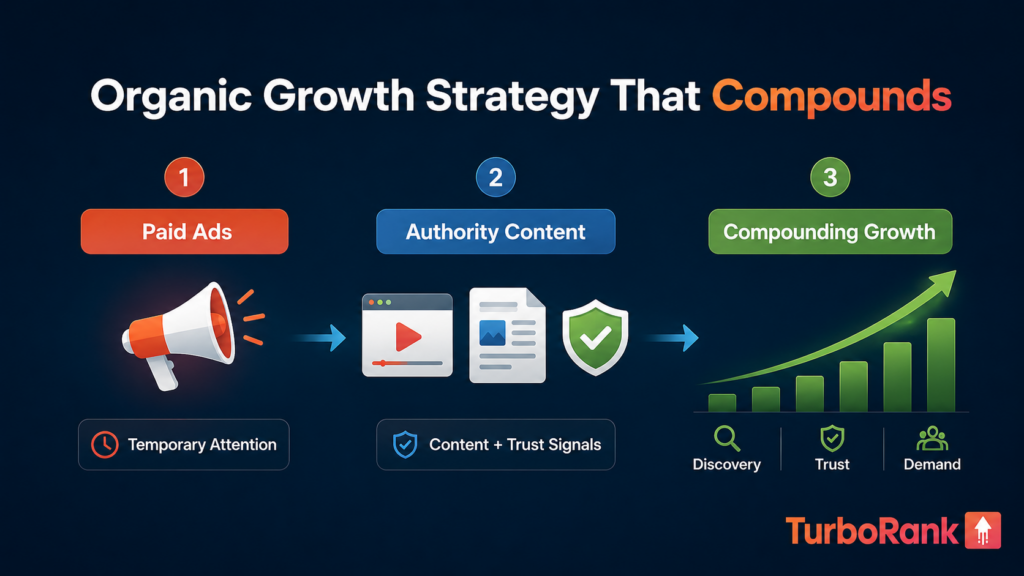
Paid media will always have a role, but it becomes more effective when customers already recognize the brand, trust its expertise, and encounter it across organic channels.
TurboRank helps established ecommerce brands turn YouTube into a long-term authority asset. Our Free Quick Fix Audit shows where your brand’s visibility and authority signals are weak—and where you can begin building growth that does not disappear when the campaign ends.
Frequently Asked Questions
Does Brand Authority Replace Paid Advertising?
No. Paid advertising can create immediate reach and traffic. Brand authority complements it by building trust and visibility that can continue without constant spending.
How Does YouTube Reduce Paid Ad Dependency?
YouTube creates evergreen videos, searchable transcripts, engagement signals, and citation opportunities that can keep attracting and educating customers after publication.
How Long Does Ecommerce Brand Authority Take to Build?
Authority takes consistency, but every valuable piece of content strengthens the foundation. Over time, that position becomes more difficult for competitors to replicate.
How Can TurboRank Help?
TurboRank helps ecommerce brands build authority through YouTube strategy, optimization, content alignment, and visibility improvements designed to support sustainable organic growth.
Matthew Pearce has been at the forefront of YouTube growth since 2007, when he was first hired to produce viral video content. With over a decade of hands-on experience, he’s helped launch hundreds of successful YouTube channels and driven millions in direct sales through the platform. As a strategist and content developer, Matthew specializes in turning creative vision into scalable growth. He also leads a weekly YouTube series, offering marketers expert insights on emerging trends and what actually moves the algorithm.