
Video budgets have a sneaky way of growing. A quick shoot turns into a full production. The production picks up an agency. And somewhere along the way, someone always asks for a drone shot, and nobody really knows why. Next thing you know, you’ve spent six figures on one video, and now you need a YouTube marketing agency who can actually make it worth something.
Every agency pitch tends to sound the same after that: more views, more subscribers, more engagement. All easy to measure, all a little beside the point. More of the right people, or just more people?
As ThoughtLeaders puts it, “YouTube has become the go-to platform for brands that want to move beyond traditional ads and connect with audiences through authentic, creator-driven content. But choosing the right YouTube agency, one that truly understands the unique nature of sponsorships, is harder than it looks.” That’s even more true once you already have a channel full of history riding on the decision.
If you’re figuring out how to choose a YouTube marketing agency for a channel that isn’t starting from scratch, here are six questions worth asking first. For the bigger picture, check out What YouTube SEO Services Should Include for Established Brands.
Watch the Full Video
We covered this in a video first, running through all six questions. Watch it here!
Do They Actually Get Your Customer?
Ask an agency who they’re targeting and you’ll often hear “enterprise decision-makers.” Sounds specific. It isn’t. A finance exec approving a seven-figure budget and an office manager buying a new printer are both decision-makers, technically, but they’re not watching the same video.
A good YouTube marketing agency should be able to tell you exactly who your buyer is: what they’re trying to solve, what they’re searching for at midnight, and why that viewer matters more than a thousand random scrollers. That’s the difference between racking up views and actually reaching people who might buy from you.
Do They Get Search Beyond Just YouTube?
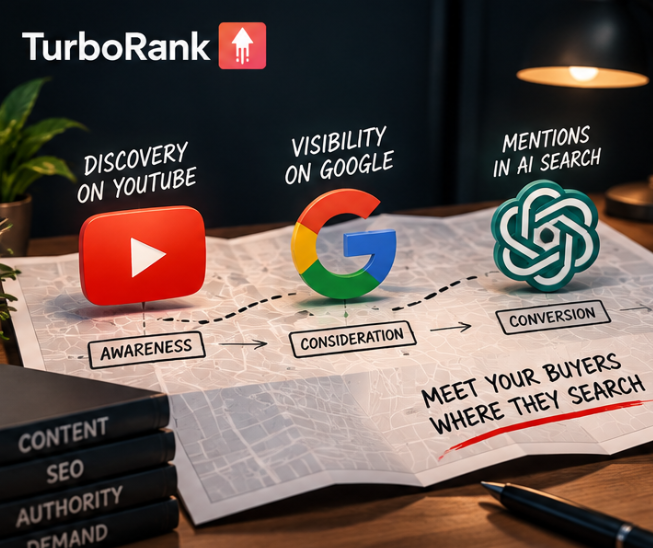
People don’t just watch YouTube to kill time anymore. They use it to compare options, size up vendors, and talk themselves into or out of a decision, often while also Googling the same thing and asking an AI chatbot to sum it up. An agency still thinking about ranking one video for one keyword is a step behind.
The real goal is bigger: making sure your videos, your website, and your execs are all saying the same smart thing about what you do, so YouTube, Google, and AI tools all point back to you as the expert. We go deeper on that idea in How to Build Digital Authority, if “AI authority” still sounds like a buzzword to you.
Fix What You’ve Already Got Before Making More
If your channel already has 50, 150, or 300 videos sitting on it, the fastest win usually isn’t another shoot, it’s figuring out why the videos you already have aren’t pulling their weight. Most agencies default to “let’s make more” because it’s an easier pitch than admitting the back catalog needs work. Here’s a quick gut check before booking anything new:
- Look at click-through rate by topic, not by publish date.
- Notice which videos get plenty of impressions but few clicks. That’s a title and thumbnail problem, not a content one.
- Check how long people actually watch. A twelve-minute video with ninety seconds of average watch time is telling you something.
- Find videos ranking on page two for something you actually want to rank for. A rewritten title or thumbnail can often push these over the edge without filming a single new frame.
- See what topics your competitors already own, and which ones nobody’s claimed yet.
Do this before spending another twenty thousand dollars on production, and whatever you make next actually fills a gap instead of piling onto one that already exists.
Retention Is What Actually Matters
Getting the click is the easy part. Keeping someone watching is where most videos fall apart. The title and thumbnail earn the click. The first thirty seconds earn the next minute. That minute earns the rest.
Most agencies only bring up retention after a video flops, when really it’s a decision you make before you even film. Does the video deliver on its promise fast enough? If your thumbnail says “six questions,” question one should show up in the first fifteen seconds, not after three minutes of intro music and a logo animation. We cover this in more depth in YouTube Marketing Strategy: Increase Engagement & Audience Retention, if you want the fuller playbook on where videos tend to lose people.
Where Better Video Ideas Actually Come From
Most content calendars get built around whatever’s happening internally: a launch, a big quarter, an executive who’d like some camera time. None of that’s wrong exactly, it’s just rarely what your audience is actually searching for.
Try flipping it. Ask your sales team what prospects ask on every single call. That list beats any brainstorm, because it’s already proven there’s real demand behind it. Somebody just hasn’t answered it on your channel yet.
Know What Success Actually Looks Like
Before you sign anything, get specific about what success looks like in six months. More website traffic? More qualified leads? A better return on what you’re already spending to bring in customers? Write it down. Otherwise you’ll end up celebrating whatever number looks best in the report, comments doubled, great, while nobody checks whether it actually led to a sale.
Somebody’s Already Winning Your Buyers’ Searches
Take the five questions your sales team hears most often and search each one on YouTube. Whoever shows up first is talking to your prospect before you are. Do this regularly and it stops feeling like an SEO exercise. It turns into an actual market share war, fought quietly in search results months before a sales call even happens, and yes, your competitors can run this same search on you too.
It’s Part of a Bigger Journey
A good video doesn’t have to close the deal on its own. It just needs to introduce you, answer a question, or build enough trust that someone keeps looking into you elsewhere. That’s why a real Business YouTube Strategy connects to everything else you’re doing, your website, your sales materials, what your execs are saying publicly, not just your channel page.
The Real Checklist
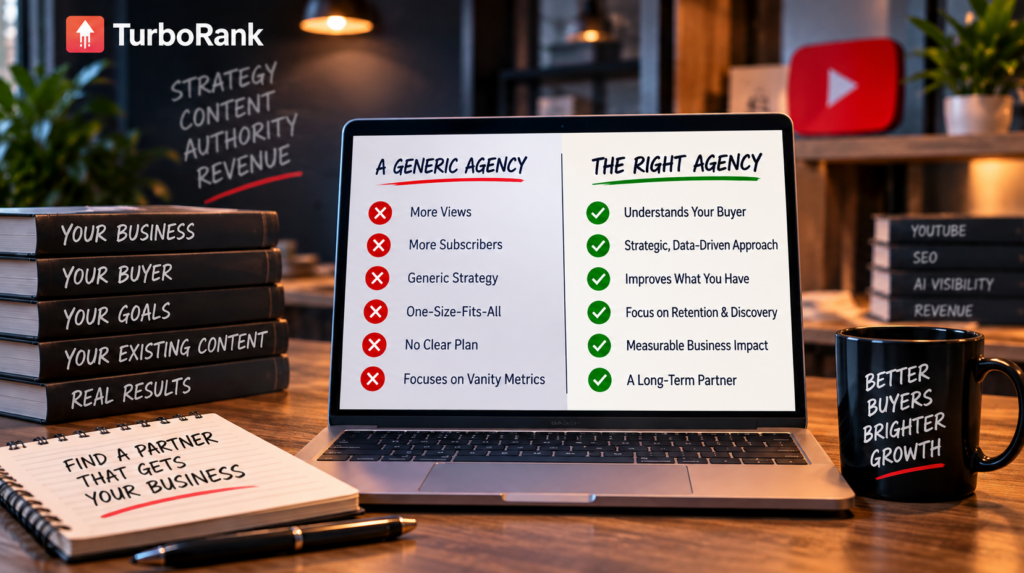
Understands your actual buyer, not just their job title. Wants to fix what you’ve already published before making anything new. Treats retention as something to plan for, not fix after the fact. Will commit to real business metrics, not just views. Understands how YouTube fits into the bigger picture, not just the channel page.
It’s a similar list to what other agencies land on, too. Market Maker MGMT boils it down to three blunt questions: “Who does the work, employees or subcontractors you will never meet? What happens in month one, week by week? Which metric will you report against, and what does failure look like?” If an agency gets vague on any of those, that’s your answer.
Pick a YouTube marketing agency because they understand your business and your buyer, not because they promised the biggest subscriber count. A smaller audience of the right people beats a huge one that was never going to buy from you.
Frequently Asked Questions
What should I look for in a YouTube marketing agency?
Someone who can describe your buyer specifically, wants to fix what you’ve already published, and will commit to a real, measurable definition of success, not just views and subscribers.
Is a video marketing agency different from a YouTube marketing agency?
Not really, in practice. What matters more is whether they treat YouTube as one piece of a bigger strategy instead of its own isolated thing.
What’s “AI authority” in plain terms?
It means your videos, your website, and your execs are all saying the same smart thing about your expertise, so when someone asks an AI tool who’s good at this, your name comes up.
Should we make more videos, or fix what we have?
Fix what you have first. It’s usually the faster, cheaper win.
How do I know if our agency is actually working?
Ask them this: if someone asked an AI tool what your company is known for, what would it say? If they can’t answer, they’re probably optimizing for views, not for anything that actually matters.
Choose the Agency Accountable to Revenue
At TurboRank, we work with established businesses that are already investing in video and want it to actually pay off, not just look good in a report. If that sounds like the gap between you and your current agency, grab a Free Quick Fix Audit or email hello@turborank.co. We’ll tell you what’s working, what isn’t, and where the real opportunity is. Next production budget, maybe we skip the drone.

Mary Ann Bautista is the co-founder of TurboRank, where she helps businesses accelerate growth on YouTube by applying her deep expertise in direct response marketing. Her unique approach blends proven performance strategies with platform-native YouTube tactics to drive discoverability and results. When she’s not fine-tuning campaigns, you’ll find her on a Pilates reformer—or exploring Pinot Noirs in Sonoma County.