
The short answer: CPA (cost per acquisition) is what you paid for one action, like a signup or a sale. CAC (customer acquisition cost) is what it really cost to win a paying customer once you add up everything you spent. The gap between those two numbers is where marketing attribution tends to go off the rails, and where YouTube is often doing a lot of work nobody gives it credit for.
Your dashboard says Google made the sale, so Google gets a bigger budget. Meanwhile, the video that actually convinced the customer three weeks ago gets nothing. Not even a thank you card.
Prefer to Watch? Here’s the Video
TurboRank co-founder Matthew Pearce breaks it all down below. Mai Tai optional.
CAC vs CPA: What’s the Difference Between Customer Acquisition Cost and Cost Per Acquisition?
The easiest way to think about customer acquisition cost vs cost per acquisition: CPA is the price of one step, and CAC is the price of the whole trip.
CPA is what a campaign paid for one specific thing – an email signup, a click, a first purchase.
CAC is the bigger picture: everything you spend to get customers divided by the number of people who actually bought. Add up every channel and you get your blended customer acquisition cost – the number your CFO actually loses sleep over.
Here’s a quick illustration with made-up round numbers. You spend $25,000 on ads for a $700 wellness gadget and get 1,000 email signups. That’s a $25 CPA. Nice! But only 50 people buy, and after video, creative and agency costs, you’ve spent $40,000. That’s an $800 CAC on a $700 product. Less nice.
As thatsgonna.help explains, “CAC vs CPA marketing matters wherever the tracked action happens before, after, or more than once per customer. The comparison is most valuable for small businesses with paid media, offline sales, repeat buyers, or several systems between the ad click and the payment.”
Why Does Last-Click Attribution Credit the Wrong Channel?
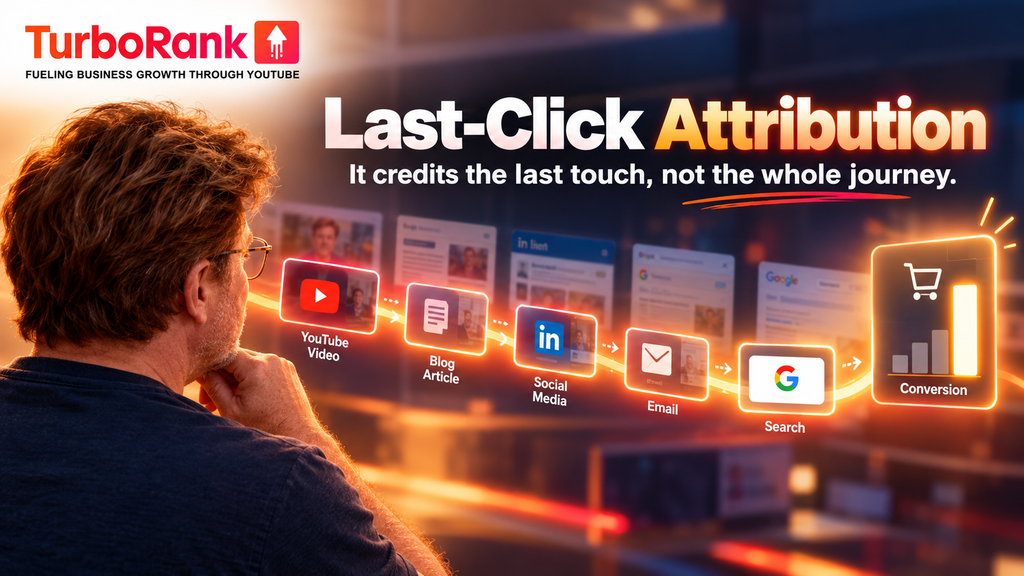
Last-click attribution gives all the credit for a sale to whatever the customer touched last.
Real people don’t buy in a straight line. Someone shopping for a fancy water filter might Google the problem, watch a couple of YouTube comparisons, forget about it for a week, see an ad, ask ChatGPT what’s good, then search your brand name and buy. The branded search gets the trophy. The videos that did the convincing get zero.
Multi-touch attribution tries to spread the credit around, but it can only see what it can track. CX Today puts it bluntly: “Leaders must prioritize customer journey attribution to see the complete picture. Flawed marketing performance tracking causes companies to overinvest in the wrong areas constantly.”
Is YouTube a Customer Acquisition Channel If It Rarely Gets the Last Click?
Absolutely. YouTube customer acquisition just doesn’t look like “watched a video, bought instantly.” It looks like a customer who shows up already knowing what you sell, why it costs what it does, and why you beat the cheaper option. That’s educational marketing doing its thing.
Your report might say YouTube helped with a handful of orders, then your best customers tell you they’d been watching your videos for weeks. Same customers, very different story.
So if someone suggests cutting YouTube because it “doesn’t convert,” pump the brakes. Ads keep getting pricier, and that channel might be why the rest of your marketing works – while a competitor who keeps posting becomes the brand everyone recognizes. If that sounds familiar, read Why You’re Losing Market Share and Don’t Even Know It.
How Does AI Authority Affect Customer Acquisition Cost?
AI authority is how much AI tools trust your brand as the go-to answer in your space. More shoppers now skip the search results and ask ChatGPT, Gemini or Google’s AI Overviews things like “What’s the best air purifier for allergies?”
Generative search tools favor brands that sound consistent everywhere – videos, website, your founder’s thought leadership. That’s brand authority now. Strong AI visibility means customers find you earlier and need fewer ads to get over the line. Weak AI discoverability means paying to introduce yourself to people who already heard about your competitor. We dig into that in The Authority Gap Quietly Inflating Your CAC.
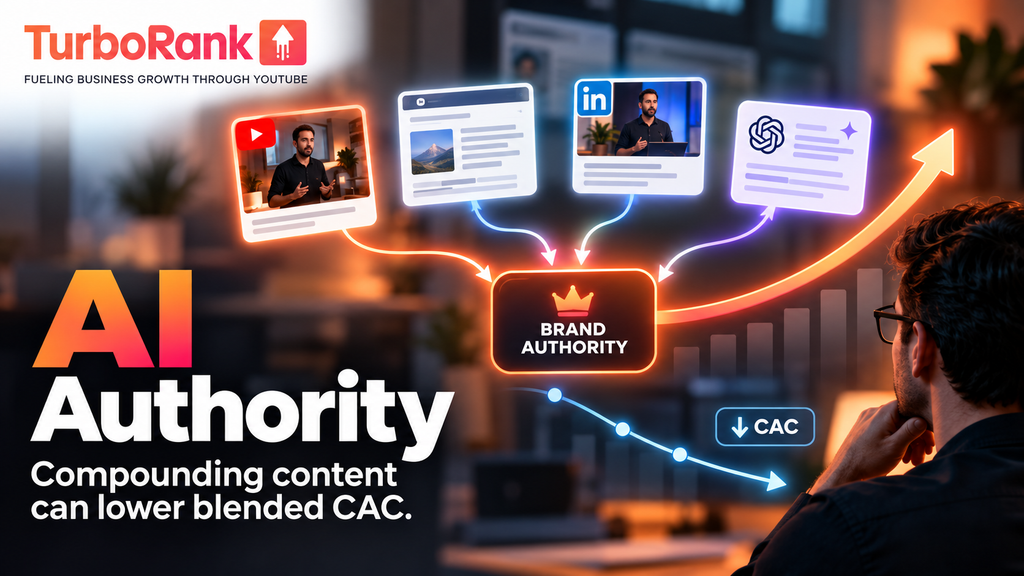
The good part? Digital authority is compounding content. Ads stop when the budget does. A helpful video keeps earning AI search visibility and showing up in AI-generated answers, for years. That’s durable authority.
How to Measure CAC When the Buyer Journey Isn’t a Straight Line
No fancy software required:
- Look at the big number first. Add up all your acquisition spend and divide by new customers. That’s blended CAC. Save CPA for fine-tuning ads.
- Watch your branded search. More people Googling your name means something upstream is working.
- Check assisted conversions. See which channels showed up earlier on the path to purchase.
- Notice who comes back. Returning visitors and repeat buyers are often the ones your content educated first.
- Just ask. Put “How did you hear about us?” at checkout. Make it a text box, not a dropdown.
- Think long term. Compare CAC to customer lifetime value. An $800 CAC on a $700 gadget is a great deal if that customer buys refills for five years.
Together, that’s a demand generation strategy based on how people actually shop.
FAQ
What’s the difference between CAC and CPA?
CPA is what you paid for one action. CAC is what you paid, all in, to win one actual customer.
Why does last-click attribution undervalue YouTube?
Because YouTube usually does its work early, while people are still researching. The last click happens later, and that’s what gets the credit.
How can a brand show up in AI-generated answers?
Be consistently helpful and credible everywhere – YouTube, your website and beyond.
Give Your Attribution Report a Second Look
Don’t just ask which channel got the sale. Ask which one helped create the customer. Request a Free Quick Fix Audit or email us at hello@turborank.co.

Leanne Lambert brings over 15 years of experience as a social media manager, content creator, and graphic designer for major brands like USA TODAY and Bozell Advertising. Her work with clients ranging from bestselling authors to national corporations has sharpened her ability to craft content that connects—fast, efficiently, and with creative edge. At TurboRank, she brings that expertise to the YouTube space, helping brands communicate with clarity, personality, and performance. When she’s not writing or designing, Leanne is likely experimenting with makeup, blasting punk rock, or spoiling her cats.